The Red Sea is one of Egypt’s greatest natural treasures. Above the surface, visitors see turquoise water, sunny beaches, islands, and dramatic desert landscapes. But beneath that clear surface lies an entirely different world.
Colorful coral gardens, schools of tropical fish, rocky formations, sandy seabeds, sea turtles, rays, and many other marine creatures create an underwater environment that attracts snorkelers and divers from around the world.
For travelers staying in Hurghada, exploring the Red Sea coral reefs can be one of the most memorable experiences of an Egyptian holiday. You do not necessarily need advanced diving skills to appreciate them. In many locations, snorkeling provides an easy way to look into the underwater ecosystem and observe marine life from the surface.
Egypt’s official tourism platform notes that the Red Sea is home to more than 300 coral species and more than 1,000 fish species, with many species not found elsewhere in the world. Snorkeling and diving are available across destinations including Hurghada, El Gouna, Soma Bay, and Marsa Alam.
However, the beauty of these reefs also comes with responsibility. Coral reefs are living ecosystems, not underwater decorations. How visitors behave can influence their condition.
So, what exactly can you see beneath the surface of the Red Sea?
And how can you explore it without damaging the environment?
Why Are the Red Sea Coral Reefs So Special?
The Red Sea has become internationally famous for its clear water, colorful reefs, and remarkable marine biodiversity.
One of the reasons is the enormous variety of habitats found along the Egyptian coast. Coral reefs are connected to sandy seabeds, rocky areas, seagrass habitats, islands, lagoons, and deeper marine environments.
This means that a snorkeling trip is not simply about looking at coral.
You are entering a much larger ecosystem.
HEPCA describes the Red Sea as a rich and diverse ecosystem with more than 1,200 recorded fish species, including species that occur nowhere else. The organization also emphasizes that coral reefs support wider marine ecosystems and provide important benefits for tourism, fisheries, and coastal protection.
This ecological importance is one reason responsible tourism matters so much.
The more visitors understand the reef, the easier it becomes to appreciate why it needs protection.
What Is a Coral Reef?
Before exploring the underwater world, it helps to understand what coral actually is.
Corals are living animals that form colonies. Over time, these colonies can create large structures that provide shelter and feeding areas for many other organisms.
A healthy reef can therefore look like a colorful underwater landscape, but it is actually a living community.
Small fish hide among coral branches. Other species search for food around rocks and crevices. Larger animals may pass through the area while using the reef as part of their wider habitat.
This is why touching coral can be harmful.
What may look like a hard piece of colorful stone can contain living organisms.
HEPCA’s visitor guidance specifically advises divers and snorkelers not to touch anything on the reef.
A World of Color Beneath the Surface
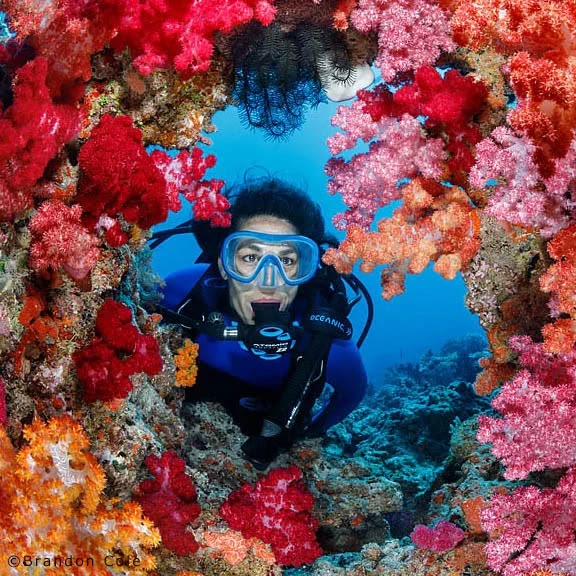
One of the first things visitors notice when snorkeling in the Red Sea is color.
Depending on the location, sunlight, depth, and water clarity, coral may appear in shades of brown, orange, yellow, green, purple, blue, and pink.
Fish add even more color.
Bright yellow fish can move between coral formations. Blue and silver fish may pass in groups. Striped species can disappear into the reef before suddenly becoming visible again.
The underwater scene changes constantly.
One moment you may be watching a small fish hiding between coral branches. A few seconds later, an entire school can pass in front of you.
That movement is one of the reasons snorkeling never feels exactly the same twice.
Which Fish Can You See?
The Red Sea is home to an impressive variety of fish.
Depending on the location, visitors may encounter:
- Butterflyfish
- Parrotfish
- Angelfish
- Surgeonfish
- Damselfish
- Wrasse
- Groupers
- Pufferfish
- Lionfish
- Triggerfish
- Barracuda
- Clownfish in suitable habitats
- Different species of small schooling fish
Not every snorkeling site contains the same species.
The reef’s structure, depth, currents, food availability, and surrounding habitat all influence which animals are present.
This is why experienced guides often encourage visitors to observe the reef carefully rather than simply searching for the largest animals.
Some of the most interesting creatures are small.
Schools of Fish
One of the most spectacular sights on a Red Sea snorkeling trip is a large school of fish moving together.
Hundreds of small fish can appear to move as if they were one organism.
They change direction almost simultaneously, creating constantly shifting patterns beneath the surface.
Schools often stay close to reef structures because the reef provides food and shelter.
For photographers, these moments can be particularly impressive.
However, visitors should avoid chasing fish in an attempt to get a better photograph.
The best wildlife encounters happen when animals are allowed to behave naturally.
Coral Gardens and Reef Structures
Not all coral reefs look the same.
Some areas are dominated by branching coral. Others feature large rounded colonies or massive formations.
You may also see reef walls, coral-covered rocks, sandy channels, and shallow gardens.
These differences create a variety of habitats.
A small fish that hides inside branching coral may not use the same area as a larger species that prefers open water.
This is one reason a snorkeling trip with several stops can be so interesting.
Each site can reveal a different part of the ecosystem.
Shallow Reefs for Snorkelers
Many Red Sea snorkeling experiences take place in relatively shallow areas.
This can make the reef easier to observe from the surface, especially when sunlight reaches the coral clearly.
Shallow reefs are often attractive to beginners because they allow visitors to explore without needing advanced diving skills.
However, shallow does not automatically mean risk-free.
Currents, waves, boat traffic, coral formations, and sea conditions still matter.
Always listen to the guide and remain within the designated snorkeling area.
Snorkeling in Hurghada
Hurghada is one of the best-known gateways to the Egyptian Red Sea.
Its location provides access to numerous offshore reefs and islands.
HEPCA notes that Hurghada’s marine tourism fleet provides access to offshore locations including Giftun, Abu Ramada, and Magawish.
This variety gives visitors many choices.
A short snorkeling trip may focus on one or two reef locations.
A full-day boat excursion may combine several snorkeling stops with lunch and time on an island or beach.
The exact itinerary depends on the operator, weather, and sea conditions.
Giftun and Nearby Reef Areas
The Giftun area is among the most popular marine excursion zones around Hurghada.
Its combination of islands, clear water, beaches, and reef habitats makes it attractive to both first-time visitors and experienced snorkelers.
Depending on the excursion, travelers may spend part of the day snorkeling and another part relaxing on the island.
This combination works particularly well for families and groups because not everyone needs to spend the entire day in the water.
Abu Ramada and Other Reef Sites
Abu Ramada is another name frequently associated with marine excursions from Hurghada.
The area is known for coral reefs and marine life and is visited by snorkelers and divers.
Different reef sites offer different underwater landscapes.
Some are better known for coral gardens, while others may attract larger fish or offer interesting underwater formations.
The important point is that there is no single “perfect” Red Sea reef.
The best site for you depends on your interests, swimming ability, weather conditions, and the type of excursion you choose.
Magawish and the Southern Hurghada Area
Magawish is also associated with Red Sea excursions and offshore marine environments.
For travelers staying in Hurghada, these areas can be convenient options for exploring the sea without traveling far south.
A local excursion can therefore provide an introduction to the underwater world even if your holiday is relatively short.
If you have several days available, you can then consider a longer marine excursion to explore additional locations.
Marsa Mubarak and Turtle Encounters
Travelers interested in marine wildlife may also consider excursions farther south, particularly around Marsa Mubarak near Marsa Alam.
The area is known for opportunities to observe marine animals, including sea turtles.
However, responsible wildlife tourism requires realistic expectations.
Turtles and other wild animals are not attractions that can be guaranteed on demand.
They move freely through their habitat.
If you encounter one, keep a respectful distance and allow it to continue its natural behavior.
Never chase, touch, block, or feed marine animals.
The experience becomes much more meaningful when the animal chooses to remain nearby without being disturbed.
Abu Dabbab and Marine Life
Abu Dabbab is another well-known snorkeling area in the Egyptian Red Sea, particularly associated with turtle encounters and shallow marine habitats.
It can be attractive to travelers who want a relatively accessible snorkeling experience.
However, conditions change.
Marine animals are wild, and sightings cannot be promised.
A responsible tour operator should communicate this clearly rather than advertising a guaranteed encounter with a particular species.
Sharm El Naga
Sharm El Naga, south of Hurghada, is another location associated with coral reef experiences.
Its coastal reef environment can provide convenient access to underwater scenery without requiring a long boat journey.
This can be useful for travelers who prefer a reef experience from a shore-based location.
The choice between a shore reef and a boat excursion depends on your priorities.
A shore site may provide more flexibility.
A boat trip can offer access to multiple reef locations.
What Else Lives Around the Coral Reef?
Fish and coral are only part of the story.
The wider Red Sea ecosystem supports many different forms of marine life.
Depending on the location, visitors may encounter:
- Sea turtles
- Rays
- Moray eels
- Octopuses
- Crabs
- Starfish
- Sea cucumbers
- Shellfish
- Different types of sponges
- Sea urchins
- Various small reef organisms
Some animals are easy to spot.
Others require patience.
A moray eel, for example, may hide inside a rocky crevice with only its head visible.
An octopus can blend remarkably well with its surroundings.
This makes reef snorkeling partly an exercise in observation.
Why Marine Habitats Matter
A coral reef is not an isolated attraction.
It is a habitat.
Small fish use it for shelter. Predators use it as a feeding environment. Coral structures influence water movement and provide space for many organisms.
Healthy reefs also have benefits beyond marine biodiversity.
HEPCA explains that coral reefs provide ecosystem services related to tourism, fisheries, and coastal protection. They can absorb wave energy and help protect shorelines.
This means that protecting coral reefs is not only about preserving beautiful underwater scenery.
It is also about maintaining ecological and economic systems connected to coastal communities.
The Great Fringing Reef of Egypt
The scale of Egypt’s reef system is remarkable.
HEPCA describes the Great Fringing Reef of the Egyptian Red Sea as extending for more than 2,000 kilometers along the Red Sea coast and around numerous islands. The organization also notes that approximately half of Egypt’s fringing reef is within declared protected areas.
HEPCA highlights the unusual resilience of some northern Red Sea reefs and their potential importance for coral conservation in a warming climate.
This makes the Egyptian Red Sea important not only for tourism but also for marine conservation and scientific research.
Why Coral Reefs Need Protection
Despite their resilience, coral reefs are vulnerable.
Human activities can cause physical damage, pollution, habitat destruction, and other pressures.
Boat anchoring is one example.
Dropping an anchor directly onto coral can break or crush living reef structures.
HEPCA has developed and maintained a large mooring system designed to reduce anchor damage. In April 2026, its teams inspected hundreds of moorings and maintained or reinstalled many of them across Red Sea sites.
This illustrates an important principle:
Responsible marine tourism requires good practices both from visitors and from tourism operators.
Never Touch Coral
This is one of the most important rules for snorkeling.
Do not touch the coral.
Even a gentle touch can damage fragile organisms.
Standing on coral is particularly harmful because the pressure can break colonies.
You should also avoid using your hands to stabilize yourself on reef structures.
If you need assistance while snorkeling, ask the guide or use appropriate flotation equipment.
HEPCA’s responsible traveler guidance emphasizes respecting reefs and marine animals and avoiding disturbance.
Do Not Feed Fish
Feeding fish may seem harmless.
It is not a good practice.
Wild animals should be allowed to find their own food and behave naturally.
Feeding can alter animal behavior and may encourage fish to associate humans with food.
It can also change the natural balance around frequently visited sites.
Enjoy the fish without trying to control where they swim.
Do Not Chase Marine Animals
A close encounter with a turtle, ray, dolphin, or other animal can be unforgettable.
But the correct response is not to swim after it.
Let the animal decide whether it wants to remain nearby.
Chasing can create stress and force animals to change their normal behavior.
Responsible wildlife observation is about patience.
Sometimes the best encounter happens when you stop moving and simply watch.
Avoid Collecting Shells and Coral
A shell on the seabed may look like a harmless souvenir.
But it can be part of the ecosystem.
HEPCA specifically advises visitors not to collect shells or corals and notes that shells can provide temporary homes for marine creatures.
The best souvenir is therefore a photograph.
Leave the reef exactly where you found it.
Choose Operators That Respect the Reef
Responsible tourism begins before you enter the water.
When comparing snorkeling excursions, ask questions.
Does the operator use designated mooring systems?
Do guides explain reef etiquette?
Are wildlife encounters presented honestly?
Does the crew discourage touching coral and feeding animals?
Are group sizes reasonable?
Does the company respond appropriately to poor weather or unsafe sea conditions?
These details can help you identify an operator that takes marine conservation seriously.
For travelers planning excursions from Hurghada, Best Tours Hurghada can be considered when comparing Red Sea activities and choosing an itinerary that fits your interests, schedule, and preferred level of activity.
What Should You Bring for a Snorkeling Trip?
You do not need a huge amount of equipment.
Most organized excursions provide basic snorkeling equipment, although this varies by tour.
It is useful to bring:
- Swimwear
- Towel
- Reef-safe sunscreen
- Sunglasses
- Hat
- Drinking water
- Waterproof phone case
- Light cover-up
- Dry clothes for the return journey
If you have your own mask and snorkel and are comfortable using them, you may prefer to bring your personal equipment.
Choose Sun Protection Carefully
Sun protection is essential in Egypt.
You can spend a surprising amount of time exposed to sunlight during a boat excursion.
Apply sunscreen before departure and reapply according to the product instructions.
A rash guard or lightweight UV-protective shirt can also reduce direct sun exposure.
Because marine ecosystems are sensitive, consider choosing products designed with environmental considerations in mind and follow local guidance.
Most importantly, do not let sunscreen replace basic sun protection such as shade, clothing, and hydration.
What If You Cannot Swim?
You can still enjoy the Red Sea, but you should choose an activity appropriate for your abilities.
Some snorkeling excursions are suitable for confident beginners, while others may involve deeper water or stronger currents.
If you are not a swimmer, tell the operator before booking.
Depending on the excursion, alternatives may include:
- Glass-bottom boats
- Semi-submarine trips
- Shore-based shallow-water experiences
- Boat trips where you can remain on board
- Guided snorkeling with appropriate flotation support
Never enter water simply because other passengers are doing so.
Your safety comes first.
What If You Are Snorkeling for the First Time?
Your first snorkeling experience should be relaxed.
Start in calm water if possible.
Practice breathing through the snorkel before swimming away from shore or the boat.
Keep your movements slow.
Do not kick aggressively toward coral.
And remember that you do not need to swim far to have a good experience.
Some of the most interesting reef life can be found close to the surface.
Understanding Sea Conditions
The Red Sea is often calm and clear, but it is still a natural body of water.
Wind and waves can change conditions quickly.
Current strength can also vary between locations.
Before entering the water, listen carefully to the guide.
If the crew recommends staying within a certain area, there is a reason.
Weather and sea conditions can also affect the itinerary itself. A responsible operator may change a snorkeling location or cancel a water activity if conditions become unsuitable.
That flexibility is part of responsible tourism.
The Importance of Mooring Systems
One of the less visible parts of reef conservation happens beneath the boats.
Traditional anchoring can damage coral.
Mooring systems allow boats to secure themselves without repeatedly dropping anchors onto sensitive reef areas.
HEPCA’s mooring program has been developed specifically to reduce this type of damage. Its April 2026 update reported continued inspection, maintenance, and reinstallation of moorings across numerous Red Sea sites.
As a visitor, you may never notice the mooring system.
But it can make a major difference to the reef.
New Ways to Reduce Pressure on Natural Reefs
Responsible tourism sometimes means creating alternatives to heavily visited natural sites.
HEPCA has supported the development of artificial dive sites near Hurghada, including an underwater museum project, with the goal of offering additional attractions and reducing pressure on natural coral reefs.
This demonstrates an important idea.
Conservation does not necessarily mean stopping tourism.
Instead, tourism can be managed differently so that visitors continue enjoying the Red Sea while sensitive natural habitats receive greater protection.
Coral Reefs and Climate Change
Climate change is another major challenge for coral ecosystems.
Rising ocean temperatures can contribute to coral bleaching and other forms of stress.
The Great Fringing Reef of Egypt has attracted particular scientific and conservation interest because some northern Red Sea reefs have been identified as unusually tolerant of warming conditions.
That does not mean these reefs are invulnerable.
Local protection still matters.
Reducing physical damage, pollution, careless tourism, and other human pressures can help reefs maintain greater resilience.
How to Take Better Underwater Photos
If you enjoy photography, the Red Sea offers endless subjects.
For better snorkeling photographs:
Get Close Without Touching
Water reduces contrast and color.
Move close to your subject while maintaining a respectful distance.
Never touch coral to position yourself.
Use Natural Light
In shallow water, sunlight can produce beautiful colors.
Try photographing when the sun is reasonably high and visibility is good.
Photograph Behavior
Instead of taking only static pictures, look for movement.
A fish entering coral, a school changing direction, or a turtle swimming across the reef can create a much more memorable image.
Be Patient
Wildlife does not follow a schedule.
Wait.
Observe.
Let the reef come to you.
A Morning Snorkeling Experience
A typical snorkeling morning from Hurghada might begin with hotel pickup or a meeting at the marina.
After boarding, the boat heads toward a selected reef location.
The journey itself can be relaxing.
Once you arrive, the guide explains safety rules and snorkeling etiquette.
Then the group enters the water.
Below you, the reef gradually appears.
First, you may notice the colors.
Then individual fish become visible.
As your eyes adjust, you begin noticing smaller details: a fish hiding inside coral, a sea urchin beneath a rock, or a school moving through the blue water.
After the snorkeling session, you return to the boat and continue to another location or return toward Hurghada.
The exact itinerary varies between excursions.
A Full-Day Red Sea Adventure
If you have more time, a full-day marine excursion can provide a richer experience.
It might combine:
- Several snorkeling stops
- Coral reef observation
- Island or beach time
- Lunch on board
- Relaxation
- Swimming
- Photography
This type of excursion is useful for travelers who want to make the Red Sea a major part of their holiday rather than simply adding a short activity.
Families and groups often appreciate the variety because everyone can choose how actively they want to participate.
Red Sea Coral Reefs for Families
A reef excursion can be educational as well as entertaining.
Children can learn that coral is alive and that fish depend on reef habitats.
Parents can turn the experience into a small underwater treasure hunt.
For example:
“Can you find a yellow fish?”
“Can you spot a striped fish?”
“Can you see coral shaped like branches?”
“Can you find a fish hiding in the reef?”
This approach encourages observation rather than chasing wildlife.
It also teaches children an important lesson:
The reef is something to admire, not something to touch.
Red Sea Coral Reefs for Couples
For couples, snorkeling can be a peaceful shared experience.
Floating above a colorful reef while watching fish move below creates a completely different atmosphere from sightseeing in a city.
You can combine the snorkeling experience with a beach or island visit and enjoy a full day beside the Red Sea.
Couples who prefer privacy can also explore private boat options, depending on availability and budget.
Red Sea Coral Reefs for Older Travelers
Older travelers can enjoy marine excursions too.
The key is choosing an activity that matches physical ability.
A calm boat trip with short snorkeling sessions may be more comfortable than a demanding full-day program.
If mobility or swimming ability is a concern, discuss the itinerary with the operator before booking.
Some travelers may prefer to remain on board and use a glass-bottom or semi-submarine experience instead.
What Makes a Responsible Snorkeling Experience?
A responsible snorkeling experience should achieve two goals:
You enjoy the reef.
The reef remains healthy after you leave.
That sounds simple, but it requires good behavior.
Stay above coral.
Do not touch animals.
Do not feed fish.
Do not collect shells.
Do not throw rubbish into the sea.
Do not chase wildlife.
Follow the guide.
Respect protected areas.
Choose operators that use appropriate mooring and marine-tourism practices.
HEPCA’s responsible-traveler guidance emphasizes respecting marine animals and their wild spaces and following reef-protection practices.
Why Responsible Tourism Benefits Travelers Too
Conservation is not only about protecting nature for future generations.
It also improves the experience for today’s visitors.
Healthy reefs are more beautiful.
They support more marine life.
They provide better opportunities for snorkeling and diving.
They create stronger tourism destinations.
And they help local communities whose livelihoods are connected to the sea.
When visitors support responsible operators and behave carefully, they contribute to a tourism model that can continue for many years.
Frequently Asked Questions
What can you see on Red Sea coral reefs?
Depending on the location and conditions, you may see colorful coral formations, schools of tropical fish, rays, sea turtles, moray eels, octopuses, sea urchins, and many smaller reef organisms. Wildlife sightings are never guaranteed because these are natural habitats.
Are the Red Sea coral reefs suitable for beginners?
Many snorkeling sites are suitable for beginners, particularly calm and shallow areas. However, conditions vary, so beginners should always follow the guide’s instructions and choose an excursion appropriate for their swimming ability.
Where can I go snorkeling from Hurghada?
Popular marine excursion areas include the Giftun area, Abu Ramada, Magawish, and other offshore reefs around Hurghada. Further south, destinations such as Marsa Mubarak and Abu Dabbab are also known for marine-life experiences.
Can non-swimmers enjoy the Red Sea?
Yes, but they should choose an activity that does not require swimming. Glass-bottom boats and semi-submarine experiences can provide underwater views without entering the sea, while some snorkeling tours may offer suitable flotation support.
Can I touch coral while snorkeling?
No. Coral is a living part of the reef ecosystem and should not be touched or stood on. HEPCA specifically recommends that visitors follow the simple rule of not touching anything underwater.
Can I feed the fish?
It is best not to feed wild fish. Feeding can interfere with natural behavior and is inconsistent with responsible wildlife observation.
Are sea turtles guaranteed during snorkeling?
No. Sea turtles are wild animals, and sightings cannot be guaranteed. A responsible excursion should never promise a specific wildlife encounter as certain.
What should I bring on a snorkeling trip?
Bring swimwear, a towel, sunscreen, sunglasses, a hat, drinking water, and a waterproof phone case if you want photographs. Check your tour description to see which snorkeling equipment is provided.
Is snorkeling available all year in Hurghada?
Marine excursions can operate throughout the year, but daily weather, wind, waves, visibility, and sea conditions influence the experience. Operators may change the route or activity when conditions are unsuitable.
How can tourists help protect the Red Sea?
The simplest actions are also among the most important: do not touch coral, do not feed wildlife, do not collect shells, avoid litter, follow protected-area rules, and choose operators that practice responsible marine tourism.
Final Thoughts
The Red Sea coral reefs are one of the greatest reasons travelers come to Egypt.
Beneath the surface, a completely different world is waiting.
Colorful fish move through coral gardens. Small creatures hide among rocks. Schools of fish create constantly changing patterns. Turtles and rays may pass through the area. Every reef has its own character, and every snorkeling trip can reveal something different.
For visitors staying in Hurghada, the opportunity is particularly accessible. Offshore islands and reef sites can be reached by boat, while shore-based locations provide additional options. Egypt’s official tourism platform recognizes the exceptional diversity of Red Sea marine life, while conservation organizations such as HEPCA continue working to protect reefs and promote sustainable tourism.
But the most important part of the experience is not simply what you see.
It is how you behave while you are there.
A coral reef is alive.
Do not touch it.
Do not stand on it.
Do not feed its fish.
Do not chase its animals.
Do not take pieces of it home.
Instead, observe carefully, take photographs, and leave the underwater world exactly as you found it.
Whether you are planning your first snorkeling experience, traveling with children, looking for colorful underwater photography, or simply curious about what lies beneath the Red Sea, the reefs around Egypt offer an extraordinary window into marine life.
And when your boat heads back toward Hurghada, the most memorable part of the day may be realizing that the beautiful sea you saw from the beach was only the beginning.